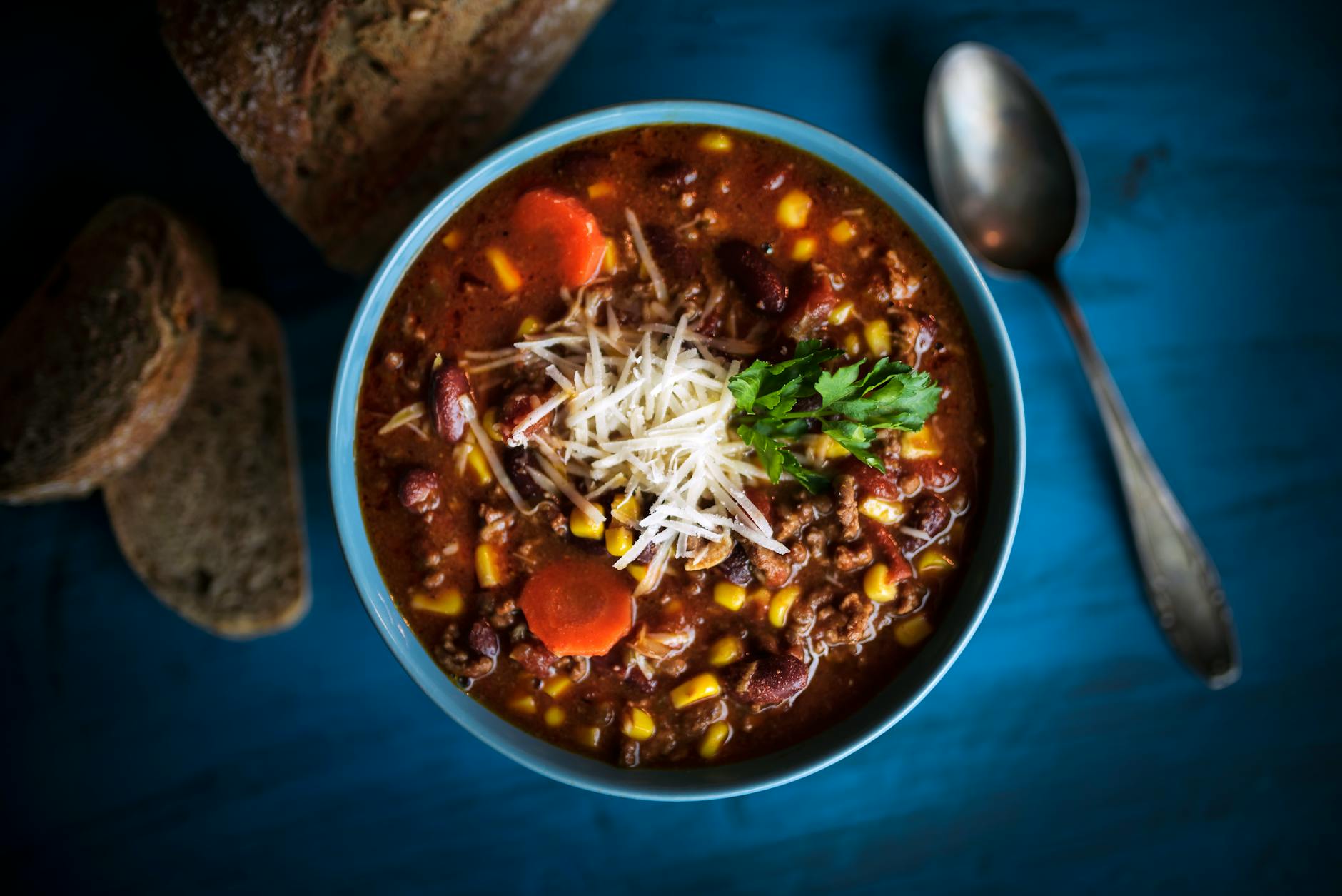
This is cold-weather food at its most honest. Beef chuck braised slow until it falls apart, barley that swells and turns the broth thick and silky, root vegetables that hold their shape, and a long simmer that fills the kitchen with the kind of smell that makes the whole household drift toward the stove. Two and a half hours, mostly hands-off.
The cut to use
Beef chuck. Always chuck. It's a tough cut full of connective tissue that breaks down into gelatin during slow cooking, which is what makes the meat fall-apart tender and the broth body-rich. Cut it into 1.5-inch cubes — bigger than you'd expect — so it stays in chunks instead of shredding.
The brown-then-braise rule
Pat the beef very dry, season aggressively with salt and pepper, and brown it in oil over high heat in batches. Don't crowd the pan — crowded meat steams instead of browns and you lose all the flavor. The dark crust on the meat is called the Maillard reaction and it's the entire reason the stew tastes like anything.
Build the base
In the same pot (don't wash it — those brown bits are gold), sweat onion, carrot, and celery until soft. Add tomato paste and cook for 1 minute until it darkens. Add a splash of red wine and scrape the bottom of the pot to deglaze. Return the beef, add beef broth to barely cover, then add bay leaves, a sprig of thyme, and 1 cup of pearl barley.
The simmer
Bring to a simmer, cover, and either keep on the stovetop on the lowest heat for 2 hours or transfer to a 325°F oven. The oven is more forgiving — you don't have to babysit it. Check at 90 minutes; the beef should be tender and the barley plump. If the stew looks too thick, add a splash of broth.
Make it ahead
Stew is always better the next day. Make it on Sunday afternoon, let it cool, refrigerate. Reheat gently on the stove with a splash of water — by Monday night the flavors will be deeper and the barley will have absorbed even more of the broth.