Every kitchen tool company wants you to believe you need a drawer full of unitaskers and a knife block with 14 slots. You don't. Professional cooks — people who cook 10 hours a day — use maybe 8 tools regularly. Everything else is marketing.
Here's what actually matters, what's worth spending money on, and what you can skip entirely.
The non-negotiables
One good chef's knife (8-inch)
This is the single most important tool in your kitchen. An 8-inch chef's knife does 90% of all cutting work — dicing onions, mincing garlic, slicing meat, chopping herbs, even crushing garlic cloves with the flat of the blade. You don't need a knife set. You need one good knife that you keep sharp. This versatile knife makes tasks like dicing onions a breeze, allowing you to focus on flavor.
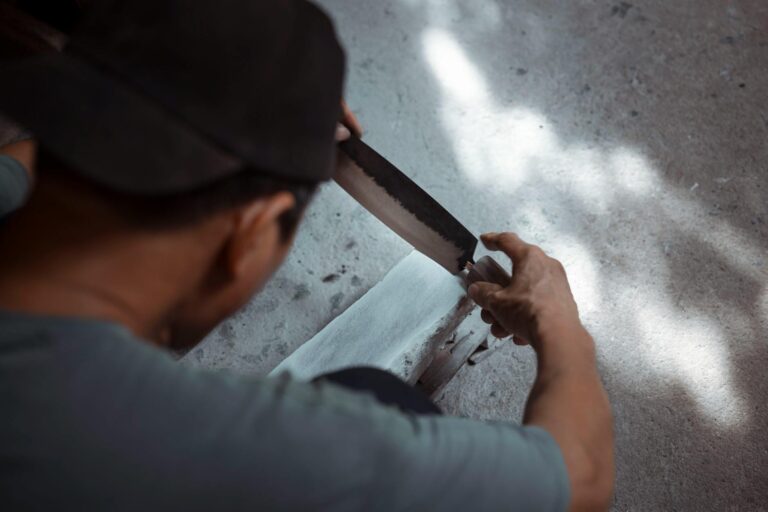
The best knife is the one that feels comfortable in YOUR hand. Go to a kitchen store, hold a few, and pick the one that feels balanced. Price doesn't always correlate with quality — a $40 Victorinox Fibrox outperforms most $200 knives in blind tests. What matters more than the knife itself is maintenance. Learn to use a honing rod before every use and sharpen on a whetstone every few months. A dull expensive knife is worse than a sharp cheap one.
A large cutting board
Bigger than you think you need. An 18x24 inch wooden or plastic board gives you room to work without ingredients falling off the edge. Small cutting boards are the reason people hate chopping — there's no space to organize.
A cast-iron skillet (10 or 12 inch)
Cast iron does things no other pan can. It sears steak with a crust you can't get on non-stick. It goes from stovetop to oven seamlessly. It makes the best crispy smashed potatoes, the crispiest fried eggs, and the most evenly browned buttermilk pancakes. It's also nearly indestructible — your grandchildren will cook on it.
The maintenance reputation is exaggerated. Cook in it, wipe it out, apply a thin layer of oil. Don't put it in the dishwasher, don't soak it overnight, and don't worry about the seasoning being "ruined" — it's not that fragile.
A heavy-bottomed pot (5-6 quart)
Dutch oven or a good stainless stock pot. This is where soups live, where beef stew simmers, where pasta boils, where tomato soup bubbles on a cold afternoon. A 5-6 quart size handles everything from a batch of creamy tomato soup to a full pound of pasta with room to spare.
A sturdy sheet pan (half-sheet size)
The unsung hero of weeknight cooking. Roasted vegetables, sheet pan chicken, chocolate chip cookies, bacon — a half-sheet pan is the right size for a home oven and the right weight to resist warping. Buy two. Line with parchment for easy cleanup.
The strong recommendations
A non-stick skillet (for eggs only)
Non-stick is terrible for searing but perfect for eggs, crepes, and delicate fish. Buy a cheap one and replace it every 2-3 years when the coating goes — there's no point investing $200 in a pan designed to be disposable. Perfect for those mornings when you want soft scrambled eggs without any fuss. Use silicone or wooden utensils only.
A digital instant-read thermometer
Takes the guessing out of meat doneness. Chicken to 165°F, steak to 130°F for medium-rare, pork to 145°F. No more cutting into meat to check, no more dried-out chicken because you were scared of undercooking. A $15 thermometer will improve your cooking more than a $300 pan.
A microplane grater
Zests citrus in seconds. Grates garlic into a paste without a press. Showers fresh parmesan over a caesar salad. Creates ginger pulp for stir-fry sauces. One of the few single-purpose tools that earns its drawer space every single week.
Tongs (12-inch, spring-loaded)
Tongs are an extension of your hand. They flip meat, toss pasta, serve salad, pull sheet pans from the oven, and retrieve things that fell behind the stove. Spring-loaded with silicone tips so they don't scratch your pans.
What you can skip
Knife sets: you need one chef's knife, one paring knife, and one serrated bread knife. The other 11 knives in the block will collect dust.
Garlic press: a microplane or the flat of your knife does the same job.
Avocado slicer: it's a knife. You already have a knife.
Electric can opener: a $4 manual one works fine.
Air fryer (controversial take): it's a small convection oven. If you already have a convection setting on your oven, you have an air fryer. That said — if you make crispy air fryer chickpeas regularly, I understand the appeal.
The maintenance that matters more than the tools
A sharp knife, a seasoned cast-iron pan, and a clean cutting board will outperform a kitchen full of expensive dull knives and warped non-stick pans. The tools matter less than how you take care of them. Proper maintenance, including keeping your blades sharp, ensures your tools remain effective for years.
Sharpen your knife regularly. Season your cast iron. Replace your non-stick when it starts to flake. Oil your wooden cutting board once a month. These five-minute habits are the difference between a kitchen that works and a kitchen that fights you.
Start with the five non-negotiables. Add the recommendations as you need them. Skip the unitaskers forever. Cook more. Buy less.