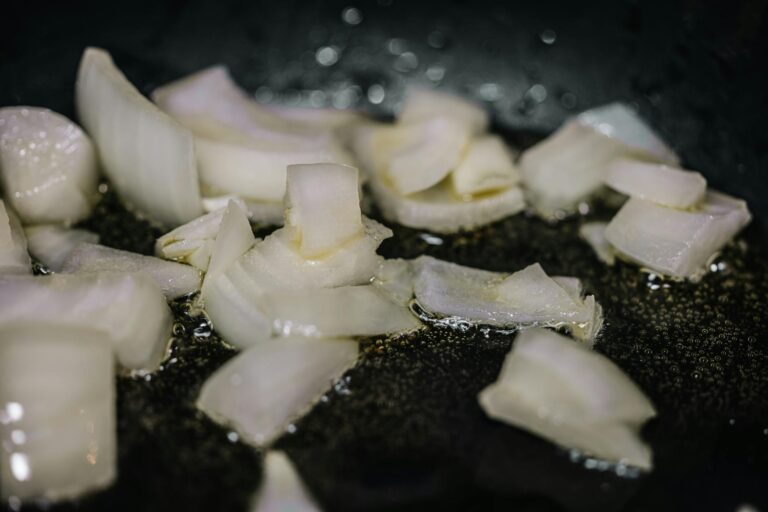
The single most useful skill in cooking has nothing to do with food. It's keeping your knives sharp. A sharp knife glides through onions, falls through tomatoes, and requires almost no force — which means you're more accurate, less tired, and far less likely to slip. A dull knife is the opposite: you press harder, the blade slips, and it cuts you. Sharp knives are safer knives.
Honing vs. sharpening — they're different
Most people use these words interchangeably and they shouldn't. Honing realigns the blade's edge — the metal bends slightly with use, and a honing rod (the long steel rod that came with your knife block) straightens it out. You should hone before every use. Sharpening actually removes metal to create a new edge. You only need to do that every few months.
Method 1: The honing rod (every use)
Hold the rod vertically with the tip on a cutting board. Place the heel of the knife near the top of the rod at a 20-degree angle. Slide the knife down and across the rod, drawing the entire edge from heel to tip. Five strokes per side. Done. This takes 15 seconds and makes a real difference.
Method 2: The pull-through sharpener (easy + fast)
A pull-through sharpener has slots with abrasive material — usually one coarse, one fine. Pull the knife through the coarse slot 3-5 times, then the fine slot 3-5 times. It works, but it removes more metal than necessary and gives you a less precise edge than other methods. Fine for cheap or beater knives. For more advanced users, consider investing in other essential kitchen tools for home cooks that offer more control.
Method 3: The whetstone (best results)
A whetstone is just a flat block of abrasive material. Soak it in water for 10 minutes. Lay the knife on the stone at a 15-20 degree angle, with the edge facing away from you. Slide the entire blade across the stone in a sweeping motion, keeping the angle consistent. Ten strokes per side on a coarse grit (around 1000), then ten more on a fine grit (around 4000-6000). It takes practice but produces the sharpest edge of any method.
How to test sharpness
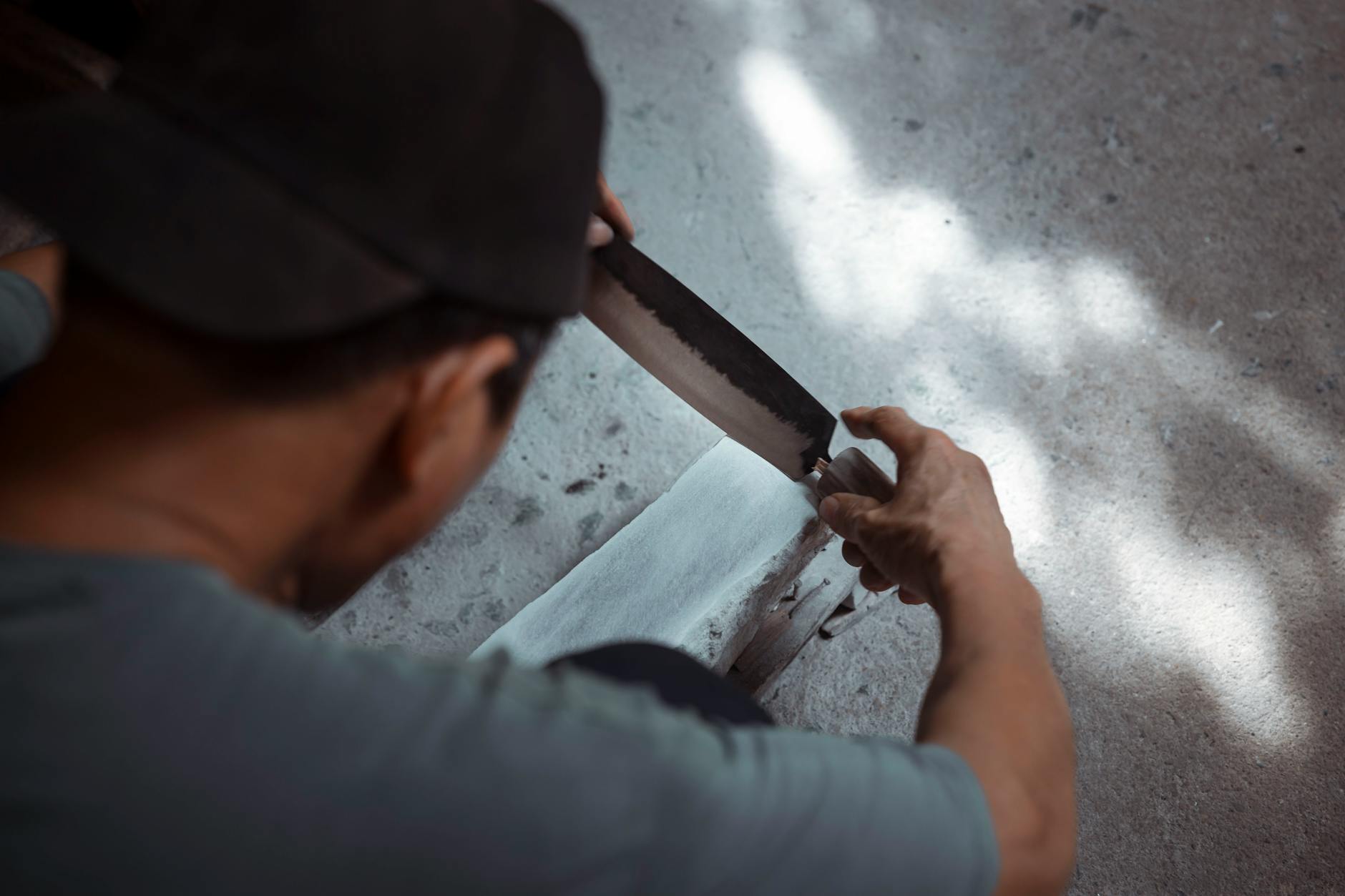
The classic test: try to slice through a piece of paper held vertically by one corner. A sharp knife slices clean. A dull one snags or crumples the paper.
The maintenance habit
Hone before every use, sharpen every 2-3 months for daily-use knives, and never put them in the dishwasher (the heat and detergent destroy the edge and the handle). Wash by hand, dry immediately, and store in a block, magnetic strip, or blade guard — never loose in a drawer where they bang against other utensils.