Reheating steak presents a unique culinary challenge: how to restore its original warmth and succulence without overcooking, drying it out, or compromising its texture. For beginners, the prospect of ruining a perfectly cooked steak can deter attempts, leading to wasted leftovers or subpar meals. This guide systematically evaluates various reheating methodologies, offering a structured approach to preserving the quality of your steak. Each method is assessed for its operational efficiency, consistency in results, and the specific equipment required, allowing for an informed decision based on your priorities—whether that's speed, texture integrity, or minimal effort. For those looking to master this skill, a simple guide to reheating steak can provide the foundational knowledge needed.
Factors to Consider for Optimal Steak Reheating
Before selecting a reheating method, evaluate several key factors that influence the outcome. Understanding these variables ensures you choose the most effective technique for your specific cut and desired result.
- Original Doneness: Steaks initially cooked to medium-rare or medium offer more flexibility for reheating without overshooting the target temperature. Well-done steaks have less margin for error and require gentler, quicker methods.
- Steak Thickness: Thicker cuts (1 inch or more) benefit from slower, more gradual heating methods to ensure the center warms evenly without drying the exterior. Thinner cuts reheat faster but are more prone to overcooking.
- Desired Outcome: Do you prioritize a crispy exterior, a uniformly warm interior, or maximum moisture retention? Your preference will guide the choice between direct-heat, indirect-heat, or combination methods.
- Available Equipment: Access to specific kitchen tools (e.g., sous vide circulator, air fryer, cast-iron skillet) will dictate which methods are feasible.
- Time Constraint: Some methods are inherently faster but may sacrifice precision or quality. If time is a critical factor, faster but potentially riskier options might be considered.
- Initial Temperature: Allowing steak to come closer to room temperature for 15-30 minutes before reheating can promote more even heating and reduce the total reheating time, especially for thicker cuts.
1. The Conventional Oven Method
The conventional oven method leverages low, indirect heat to gently warm the steak through, minimizing surface drying while gradually raising the internal temperature. This approach prioritizes even heating over rapid browning, making it a forgiving option for beginners. It's particularly effective for thicker cuts where uniform internal temperature is paramount.
Best for: Thicker cuts (1 inch or more) and achieving uniform internal temperature without excessive charring.
Pros: Reliable for even heating; less active monitoring required than skillet methods; accommodates multiple pieces simultaneously; minimal risk of overcooking the exterior if temperatures are kept low.
Cons: Slower process compared to direct heat methods; can result in a less crispy exterior if not finished with a sear; requires preheating time; may not achieve a desirable crust without an additional step.
Verdict: For beginners seeking a forgiving, hands-off method that ensures a warm center, the oven is a foundational choice. Its primary trade-off is time, not quality, provided temperatures are kept low (around 250°F / 120°C) and internal temperature is monitored with a thermometer (targeting 110-120°F / 43-49°C for medium-rare before a potential sear).
2. The Skillet Sear Method
The skillet sear method focuses on rapid, high-heat cooking to quickly warm the steak while simultaneously developing a desirable crust. This technique is best suited for thinner cuts or for finishing steaks that have been pre-warmed using a gentler method. A cast-iron skillet is ideal due to its superior heat retention and distribution.
Best for: Thinner steaks, achieving a crispy exterior, or as a finishing step after a low-temperature warming method.
Pros: Produces an excellent crust (Maillard reaction); very fast; requires minimal equipment beyond a skillet and heat source; good for imparting additional flavor with butter and aromatics.
Cons: High risk of overcooking, especially for beginners; requires constant attention and precise timing; can generate smoke; less effective for achieving uniform internal heating on thicker cuts alone.
Verdict: This method delivers on texture and speed but demands attention. Beginners should practice with thinner cuts and monitor closely to avoid a dry interior. It excels when paired with a preliminary low-heat warming to ensure the core is already close to target temperature.
3. The Oven-then-Skillet Combination Method
This hybrid approach combines the gentle, even heating of the oven with the high-heat searing of a skillet. The oven slowly brings the steak to a target internal temperature, while the skillet provides the crucial final crust. This method offers a balanced solution, mitigating the risks of both individual techniques.
Best for: Achieving both a warm, evenly cooked interior and a perfectly seared exterior on any thickness of steak.
Pros: Optimal balance of internal temperature control and external crust development; significantly reduces the risk of overcooking the interior during searing; highly consistent results.
Cons: Requires two separate pieces of equipment and two distinct cooking phases; longer overall process due to oven preheating and cooking time; more steps involved than single-method approaches.
Verdict: For beginners prioritizing quality and consistency, this is arguably the superior method. It offers a structured workflow that minimizes common pitfalls, yielding a steak that closely resembles its freshly cooked state. The added complexity is a justified trade-off for the improved outcome.
4. The Air Fryer Method
Air fryers operate by circulating hot air rapidly around food, mimicking the effects of deep-frying with less oil. For steak, this means a relatively quick reheat that can also develop a decent exterior crust. Its compact size and efficiency make it a convenient option for single servings or smaller portions.
Best for: Small to medium-sized steak portions; achieving a crisp exterior with moderate internal warming; convenience and speed for individual servings.
Pros: Faster than a conventional oven; produces a satisfyingly crisp exterior; generally easy to use and clean; requires less oil than pan-frying.
Cons: Can dry out steak quickly if overcooked; limited capacity for larger cuts or multiple pieces; results can vary based on air fryer model and power; difficult to monitor internal temperature without opening the basket frequently.
Verdict: The air fryer is a practical choice for beginners seeking speed and a good crust on smaller steaks. However, it demands careful monitoring to prevent excessive moisture loss. Start with lower temperatures and shorter durations, checking frequently, to avoid a dry outcome.
5. The Sous Vide Precision Method
Sous vide involves vacuum-sealing food and cooking it in a precisely temperature-controlled water bath. For reheating, this method excels at bringing steak to an exact internal temperature without any risk of overcooking, as the water bath never exceeds the target temperature. A final quick sear is often used to develop a crust.
Best for: Achieving unparalleled internal temperature precision and moisture retention; reheating multiple steaks to the exact same doneness; preserving the original texture of high-quality cuts.
Pros: Impossible to overcook internally; exceptional moisture retention; highly consistent results; allows for hands-off reheating once set up; ideal for preparing steak in advance.
Cons: Requires specialized equipment (sous vide circulator, vacuum sealer/water displacement method); significantly longer reheating time (30-60 minutes typically); still requires a separate searing step for crust development.
Verdict: While requiring an initial investment in equipment, sous vide offers the most precise and forgiving reheating method, especially for beginners who want guaranteed results. The extended time is a trade-off for perfect internal doneness and moisture. It's the gold standard for preserving steak quality.
6. The Microwave Quick Reheat
The microwave uses electromagnetic radiation to heat food by causing water molecules to vibrate. While undeniably fast, this method is generally considered the least ideal for steak due to its tendency to heat unevenly and rapidly dry out the meat, leading to a tough, rubbery texture.
Best for: Situations where speed is the absolute priority and texture degradation is acceptable; very thin slices of steak that are intended for other dishes (e.g., stir-fries, sandwiches).
Pros: Extremely fast; requires no specialized equipment beyond a microwave; convenient for immediate consumption.
Cons: High risk of uneven heating and rubbery texture; significant moisture loss; difficult to achieve any desirable crust; often results in hot and cold spots within the meat.
Verdict: The microwave should be a last resort for reheating steak. For beginners, it's a guaranteed path to a less-than-optimal experience. If absolutely necessary, use short intervals on a lower power setting, flipping the steak frequently, and adding a splash of liquid (broth or water) to mitigate drying.
7. The Grill Char Method
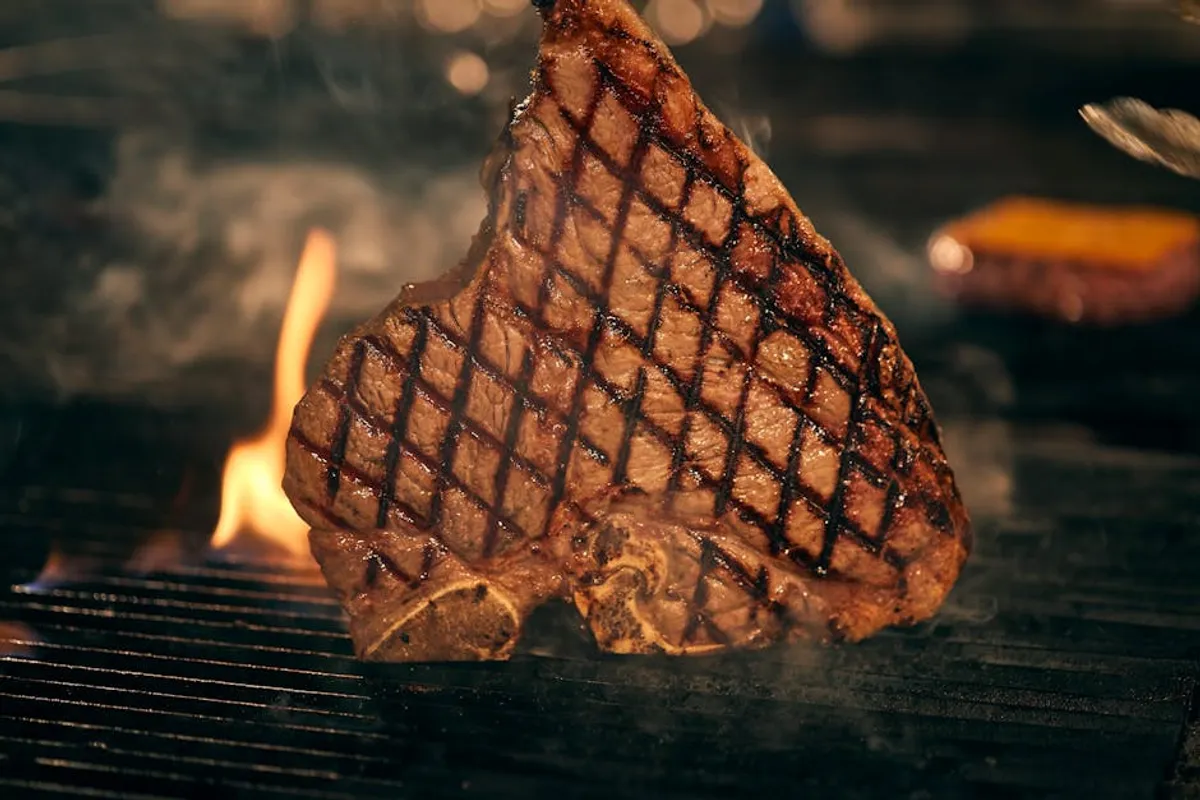
Reheating steak on a grill (charcoal or gas) can impart a smoky flavor and a desirable char, especially if the grill is hot enough. This method is best for thicker cuts that can withstand direct heat without drying out too quickly, or for achieving specific grill marks and flavors.
Best for: Thicker cuts; imparting smoky flavor and char marks; outdoor cooking scenarios where a grill is already in use.
Pros: Adds unique smoky flavor; creates an appealing charred exterior; can handle multiple steaks; good for a backyard BBQ setting.
Cons: Requires outdoor equipment; difficult to control internal temperature precisely for beginners; high risk of drying out or burning if not monitored constantly; weather-dependent.
Verdict: The grill is a viable option for those comfortable with grilling and seeking a distinct smoky flavor. For beginners, the challenge lies in managing direct heat to warm the interior without overcooking the exterior. Use medium-low heat and indirect zones if available, turning frequently.
8. The Toaster Oven Method
A toaster oven functions as a smaller, more compact version of a conventional oven, offering similar benefits for reheating steak but on a smaller scale. It's suitable for individual portions and can achieve a gentle, even warmth, often with less preheating time than a full-sized oven.
Best for: Single servings or small portions of steak; apartments or kitchens with limited space; energy-efficient reheating compared to a full oven.
Pros: More energy-efficient than a full oven for small portions; quicker preheating time; provides even, gentle heat; can produce a slight crust if desired at higher temperatures.
Cons: Limited capacity; may still require a separate searing step for a pronounced crust; temperature control can be less precise than a full oven in some models.
Verdict: The toaster oven is an excellent choice for beginners reheating a single steak, offering a balance of convenience and quality similar to the conventional oven but scaled down. Maintain low temperatures (around 250°F / 120°C) and monitor closely to avoid drying.
9. The Steamer Gentle Reheat
Steaming reheats food using moist heat, which helps to prevent drying. While less common for steak, it can be an effective method for preserving moisture, particularly for thinner slices or if the original steak was already very tender. It will not produce a crust.
Best for: Thinly sliced steak; prioritizing moisture retention above all else; integrating reheated steak into dishes where a crispy exterior isn't required (e.g., stir-fries, salads).
Pros: Excellent for moisture retention, preventing dryness; gentle heating minimizes further cooking; simple setup with a pot and steamer basket.
Cons: Does not create any crust or sear; can result in a somewhat "boiled" texture if oversteamed; less suitable for thick cuts; may dilute flavors if not seasoned post-reheat.
Verdict: The steamer is a niche but effective method for beginners focused solely on moisture. It's a good alternative if you want to avoid any further cooking of the meat. However, it requires a follow-up step if a crispy texture is desired, making it less ideal as a standalone method for a traditional steak experience.
10. The Warm Water Bath Method
Similar in principle to sous vide but without the precision of a circulator, a warm water bath involves placing sealed steak in a pot of hot (but not boiling) water. This method provides gentle, indirect heat, gradually warming the steak without direct exposure to high temperatures.
Best for: Beginners without sous vide equipment who want a gentle, low-risk warming method; smaller, thinner cuts of steak.
Pros: Prevents direct exposure to high heat, reducing risk of overcooking; good for moisture retention; requires minimal equipment (pot, sealable bag); more accessible than sous vide.
Cons: Less precise temperature control than sous vide; water temperature can fluctuate, requiring monitoring; still requires a separate searing step for crust development; not suitable for very thick cuts.
Verdict: This method offers a budget-friendly alternative to sous vide for beginners, providing a safe way to warm steak gently. While not as precise, it significantly reduces the risk of drying out compared to direct heat methods. It’s a solid choice for those prioritizing moisture and even heating without specialized gear.
Assessing Reheated Steak Quality and Choosing Your Method
The "best" reheating method is subjective, depending on your priorities and the initial state of your steak. However, objective assessment criteria can guide your choice and evaluate success:
- Internal Temperature: Use an instant-read thermometer. For medium-rare, aim for 125-130°F (52-54°C). For medium, 130-135°F (54-57°C). Remove the steak a few degrees below your target, as it will continue to cook slightly while resting.
- Moisture Retention: A well-reheated steak should still be juicy, not dry or stringy. Methods using moist heat (sous vide, steamer, water bath) or very low, slow dry heat (oven) generally excel here.
- Texture: The steak should retain its tenderness. Overcooked steak becomes tough and chewy. Methods that avoid rapid, intense heat minimize texture degradation.
- Crust Development: If a crispy, flavorful exterior is desired, methods involving a final high-heat sear (skillet, air fryer, grill, or combination methods) are essential.
- Efficiency and Effort: Consider the time investment and active cooking required. Sous vide and oven methods are more hands-off, while skillet searing demands constant attention.
For beginners, prioritizing methods that offer greater control over internal temperature and moisture retention (like the oven-then-skillet or sous vide) will yield the most consistent and satisfying results. Experimentation with different cuts and methods will refine your technique and help you identify your preferred approach.
Frequently Asked Questions
Q: Should I let my steak come to room temperature before reheating?
A: Yes, allowing your steak to sit at room temperature for 15-30 minutes before reheating can help it warm more evenly, especially for thicker cuts. This reduces the thermal shock and decreases the overall reheating time.
Q: Can I reheat steak that was originally well-done?
A: Reheating well-done steak is challenging because it has less moisture to begin with. Use very gentle, low-temperature methods like a low oven or warm water bath, and monitor closely. A quick sear might still be desirable for texture, but be extremely cautious to avoid further drying.
Q: How do I prevent my steak from drying out when reheating?
A: The primary strategies are using low, gentle heat, wrapping the steak (e.g., in foil in the oven), or introducing moisture (e.g., a splash of broth or water, or using moist-heat methods like steaming or sous vide). Always avoid high, direct heat for prolonged periods.
Q: Is it safe to reheat steak multiple times?
A: While technically possible, it's generally not recommended to reheat steak more than once. Each reheating cycle further degrades the meat's quality, both in terms of flavor and texture. For food